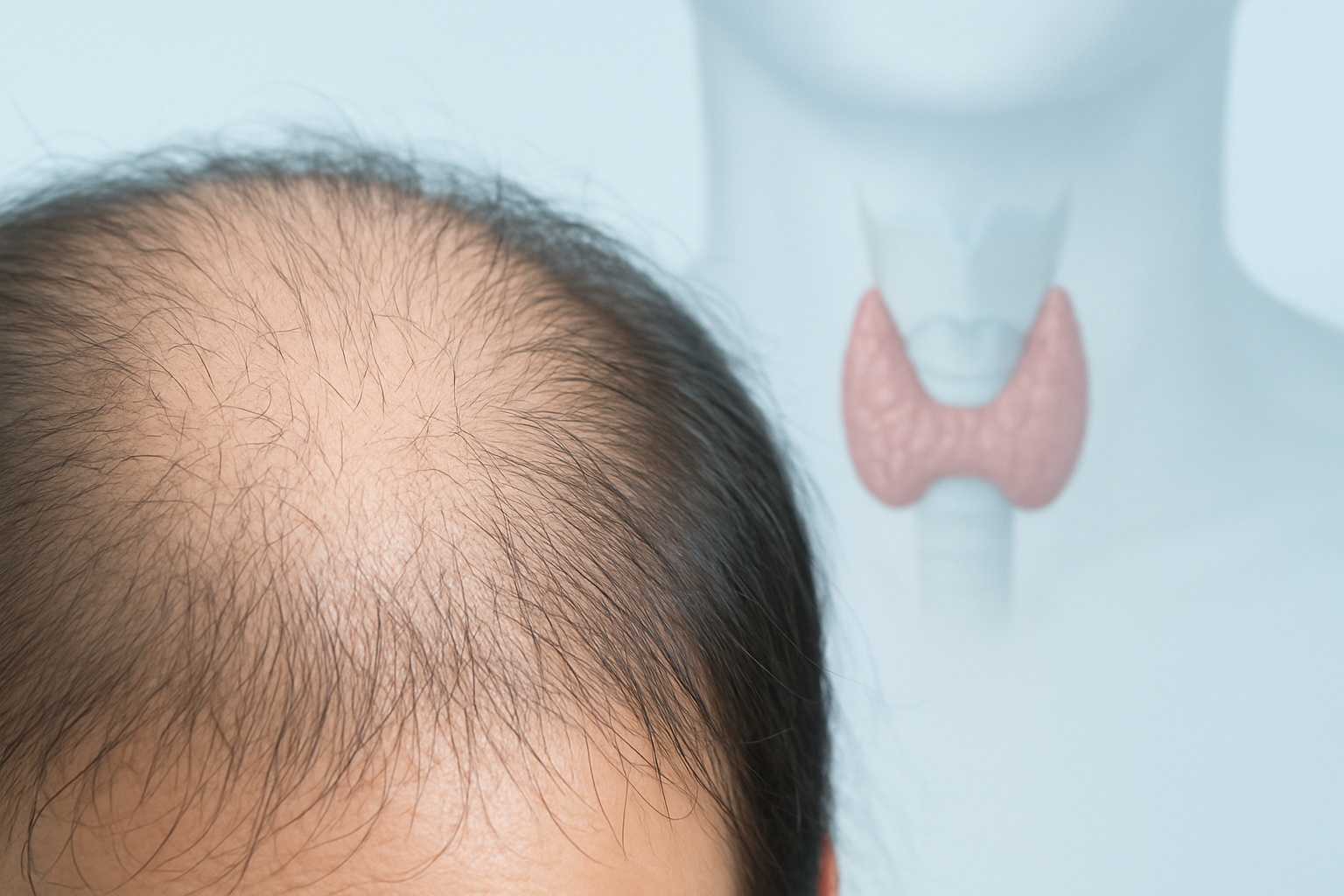
Hair loss due to thyroid disorders affects millions of people, yet many don’t realize their thinning hair stems from an underlying hormone imbalance. If you’re experiencing unexplained hair loss, changes in hair texture, or overall thinning, your thyroid might be the culprit.
This guide is for anyone dealing with hair loss who suspects thyroid issues, those already diagnosed with thyroid disorders, or people looking to understand the connection between thyroid health and hair growth.
We’ll explore how thyroid disorders actually trigger hair loss and what warning signs to watch for. You’ll also learn about getting the right tests for proper diagnosis and discover proven treatment approaches that can help restore your hair growth while addressing the root thyroid problem.
Understanding How Thyroid Disorders Trigger Hair Loss
Recognize the connection between thyroid hormones and hair growth cycles
Your thyroid gland produces hormones that directly control how your hair grows, rests, and sheds. The two main players here are T3 (triiodothyronine) and T4 (thyroxine), which act like master controllers for your hair follicles throughout their natural three-phase cycle.
During the anagen phase, your hair actively grows for 2-7 years. Thyroid hormones keep follicles in this growth phase longer and help them produce stronger, thicker hair strands.
When thyroid levels drop too low, follicles exit this growth phase early and enter the telogen (resting) phase prematurely.
The catagen phase is a brief 2-3 week transition period where hair growth stops. Thyroid dysfunction can extend this phase, creating delays in the hair cycle.
Finally, during telogen phase, hair rests for about 3 months before shedding naturally. With thyroid problems, more follicles get stuck in this resting state, leading to widespread hair loss without new growth replacing what falls out.
Thyroid hormones also regulate the production of keratin, the protein that makes up your hair shaft. When hormone levels fluctuate, your body produces weaker, more brittle hair that breaks easily.
This creates the appearance of thinning even when you’re not losing more hair than normal.
Identify which thyroid conditions cause hair thinning
Both underactive thyroid (hypothyroidism) and overactive thyroid (hyperthyroidism) can trigger significant hair loss, though they affect your hair in different ways.
Hypothyroidism is the most common culprit behind thyroid-related hair loss. When your thyroid doesn’t produce enough hormones, your metabolism slows down dramatically. This affects every part of your body, including your hair follicles. You’ll typically notice:
Gradual, diffuse thinning across your entire scalp
Hair that becomes dry, coarse, and brittle
Loss of eyebrow hair, especially the outer third
Slower hair growth rate
Hair that breaks easily when brushing or styling
Hyperthyroidism speeds up your metabolism to dangerous levels, which can exhaust your hair follicles. The hair loss pattern looks different:
Sudden, dramatic hair shedding (telogen effluvium)
Hair that becomes fine and soft
Faster hair growth initially, followed by severe thinning
More noticeable hair loss at the temples and crown
Autoimmune thyroid conditions like Hashimoto’s thyroiditis and Graves’ disease create additional complications. The immune system attacks not only your thyroid but can also target hair follicles directly, leading to patchy hair loss similar to alopecia areata.
For More Information Contact Us : 73386 71338
Learn why thyroid medication can initially worsen hair loss
Starting thyroid medication often triggers a temporary increase in hair shedding that can last 2-4 months. This happens because your hair follicles need time to adjust to changing hormone levels.
When you begin treatment, your body starts shifting from one metabolic state to another. Hair follicles that were stuck in the resting phase due to low thyroid function suddenly get activated.
This causes them to shed their old, weak hair strands to make room for new, healthier growth. The process looks alarming, but it’s actually a sign that treatment is working.
Your hair follicles also have their own timeline that doesn’t match up with how quickly thyroid medication works. Even after your blood tests show normal thyroid levels, it takes 3-6 months for hair follicles to complete their growth cycle and produce visible new hair.
This delay creates a frustrating period where you feel better overall but your hair continues looking thin.
Medication dosage adjustments can trigger additional shedding episodes. Each time your doctor changes your thyroid medication dose, your follicles need to readjust. Finding the right medication balance often takes several months, and each adjustment can restart the hair loss cycle.
The key is patience and consistent treatment. Most people see hair regrowth starting around month 3-4 of stable thyroid hormone levels, with full recovery taking 6-12 months.
Spot the Warning Signs of Thyroid-Related Hair Loss
Distinguish thyroid hair loss from other types of hair loss
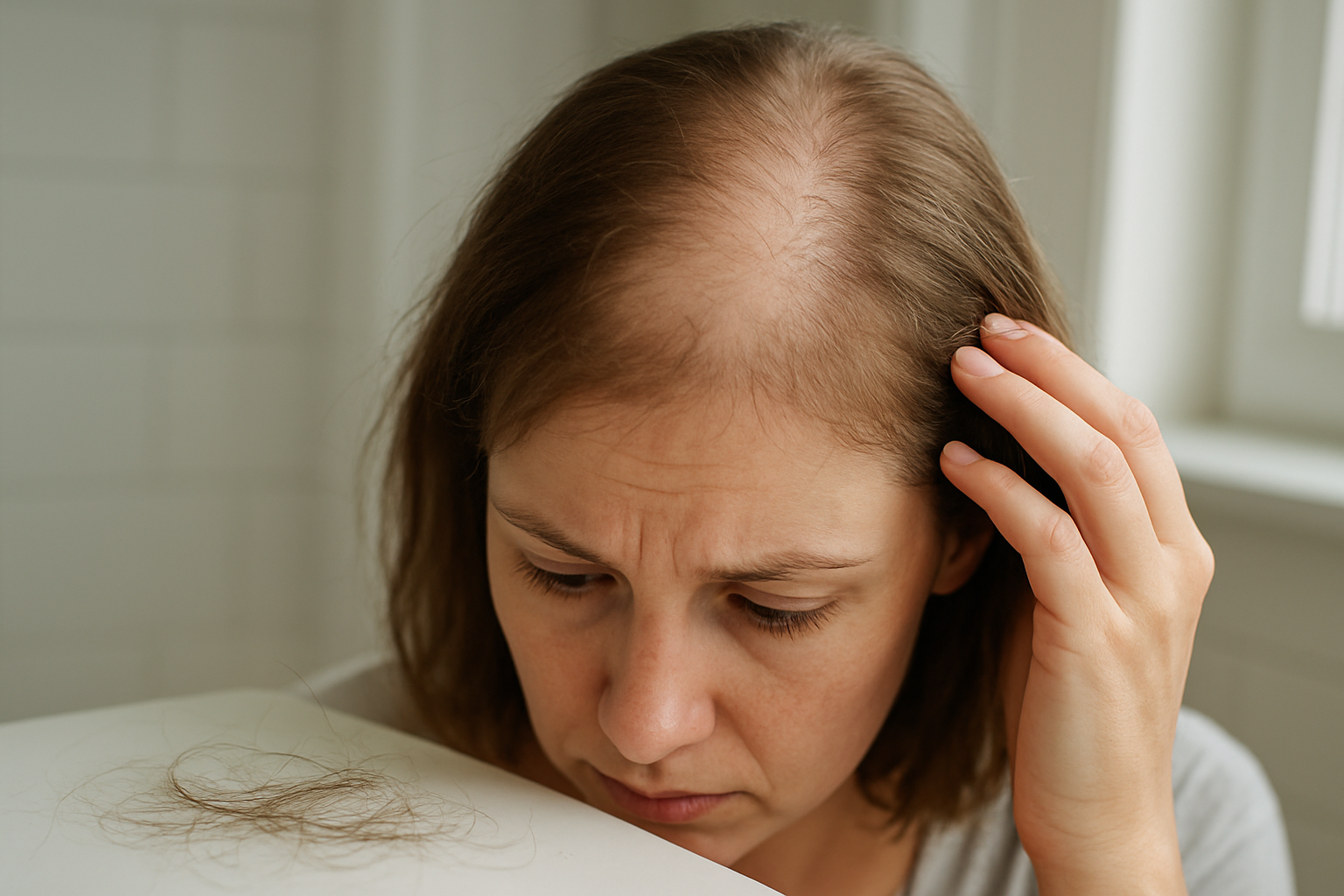
Thyroid-related hair loss has unique characteristics that set it apart from typical pattern baldness or stress-induced shedding.
While androgenetic alopecia (male or female pattern baldness) creates specific patterns like receding hairlines or crown thinning, thyroid hair loss appears more diffuse and uniform across the entire scalp.
The texture changes are particularly telling. Your hair might become noticeably finer, more brittle, or surprisingly coarse compared to your normal hair. This happens because thyroid hormones directly influence hair follicle function and the protein structure of hair strands.
Timing also provides crucial clues. Thyroid hair loss often develops gradually over months rather than appearing suddenly after a specific stressful event.
Unlike telogen effluvium (stress-related shedding), which typically resolves within six months, thyroid-related hair loss persists until the underlying hormone imbalance gets addressed.
Pay attention to where you’re losing hair. Thyroid disorders can affect eyebrow hair, particularly the outer third, and even body hair. This comprehensive hair thinning across multiple areas rarely occurs with other types of hair loss.
Notice changes in hair texture and growth patterns
Your hair’s behavior changes dramatically when thyroid function becomes disrupted. Normal hair growth cycles slow down significantly, meaning new hair takes longer to replace what you’ve lost.
You might notice that your hair doesn’t grow as quickly as it used to, or that it stops growing at a shorter length than before.
The actual feel of your hair provides important diagnostic information. Hyperthyroidism often makes hair feel unusually soft and fine, almost silky to touch.
Hypothyroidism typically creates the opposite effect – hair becomes dry, coarse, and difficult to style. Some people describe their hair as feeling “straw-like” or brittle enough to break easily during normal brushing or washing.
Growth patterns shift noticeably too. Your part line might become wider over time, or you might see more scalp showing through your hair when styling. The hairline often appears to recede evenly rather than creating the distinctive “M” shape of male pattern baldness.
Color changes can occur as well. Some people notice their hair becoming lighter or darker, or gray hairs appearing more rapidly than expected for their age.
Identify accompanying thyroid symptoms beyond hair loss
Hair loss rarely appears in isolation when thyroid disorders develop. Recognizing the constellation of symptoms helps distinguish thyroid-related hair loss from other causes and urgently signals the need for medical evaluation.
Hypothyroidism symptoms frequently include:
Persistent fatigue that doesn’t improve with rest
Unexplained weight gain despite normal eating habits
Feeling cold when others are comfortable
Dry, rough skin and brittle fingernails
Muscle weakness and joint pain
Memory problems and difficulty concentrating
Depression or mood changes
Constipation and digestive issues
Heavy or irregular menstrual periods
Hyperthyroidism presents different warning signs:
Racing heartbeat or irregular heart rhythms
Sudden weight loss despite increased appetite
Feeling hot and sweating excessively
Trembling hands or shakiness
Anxiety, irritability, or restlessness
Trouble sleeping
Frequent bowel movements
Light or missed menstrual periods
Bulging eyes or vision changes
These symptoms often develop gradually, making them easy to dismiss as stress or aging. However, when multiple symptoms appear alongside hair loss, thyroid dysfunction becomes a strong possibility.
Understand when hair loss indicates serious thyroid dysfunction
Certain patterns and severity levels of hair loss signal more urgent thyroid problems requiring immediate medical attention. Rapid hair loss occurring over weeks rather than months suggests severe hormone imbalance that needs prompt treatment.
When hair loss coincides with heart palpitations, significant weight changes, or extreme fatigue, the thyroid dysfunction has likely progressed beyond mild stages.
Thyroid storm (severe hyperthyroidism) and myxedema (severe hypothyroidism) represent medical emergencies where hair loss becomes a secondary concern to life-threatening complications.
For More Information Contact Us : 73386 71338
Seek immediate medical evaluation if hair loss occurs with:
Chest pain or irregular heartbeat
Severe anxiety or panic attacks
Dramatic weight changes (gain or loss) in short periods
Extreme fatigue preventing normal daily activities
Swelling in the neck or difficulty swallowing
Changes in vision or eye appearance
Severe mood changes or depression
Temperature regulation problems
The good news is that catching thyroid dysfunction early through recognizing these warning signs often leads to complete hair regrowth once proper treatment begins.
Your hair follicles typically remain healthy and capable of normal function – they just need the right hormonal environment to thrive again.
Get Proper Diagnosis and Testing for Thyroid Hair Loss

Request the right thyroid function tests from your doctor
Most doctors start with a basic TSH test, but this single marker won’t give you the complete picture when hair loss is involved. You need a comprehensive thyroid panel that includes TSH, Free T4, Free T3, and Reverse T3.
Many physicians rely solely on TSH, which can miss subclinical thyroid issues that still cause significant hair thinning.
Ask specifically for these tests:
TSH (Thyroid Stimulating Hormone) – Shows how hard your pituitary gland is working to stimulate thyroid function
Free T4 – Measures available thyroxine in your bloodstream
Free T3 – Tests active thyroid hormone that directly affects your hair follicles
Reverse T3 – Identifies if your body is converting T4 into inactive hormone instead of usable T3
TPO Antibodies – Detects autoimmune thyroid conditions like Hashimoto’s disease
Thyroglobulin Antibodies – Another autoimmune marker that can affect hair growth
Don’t accept “your thyroid is normal” based on TSH alone. Hair follicles are extremely sensitive to thyroid hormone fluctuations, and you might have thyroid dysfunction that doesn’t show up in standard screening tests.
Understand optimal thyroid hormone levels for hair health
Reference ranges on lab reports represent averages from the general population, not optimal levels for healthy hair growth. Your hair needs thyroid hormones to function at the higher end of normal ranges to maintain proper growth cycles.
| Test | Standard Range | Optimal for Hair Health |
|---|---|---|
| TSH | 0.5-4.5 mIU/L | 1.0-2.0 mIU/L |
| Free T4 | 0.8-1.8 ng/dL | 1.2-1.8 ng/dL |
| Free T3 | 2.3-4.2 pg/mL | 3.0-4.2 pg/mL |
| Reverse T3 | 8-25 ng/dL | Below 15 ng/dL |
Hair follicles have thyroid hormone receptors that need adequate T3 to maintain normal growth phases. When your Free T3 sits in the lower third of the reference range, your hair can enter prolonged resting phases, leading to diffuse thinning and slower regrowth.
Pay attention to the Free T3 to Reverse T3 ratio. A healthy ratio should be greater than 20:1. If Reverse T3 is elevated, your body might be converting T4 into inactive hormone due to stress, inflammation, or nutrient deficiencies.
Recognize when additional hormone testing is necessary
Thyroid function doesn’t operate in isolation. Other hormones directly impact how well your thyroid works and how your hair responds to treatment. Consider additional testing if your thyroid levels look normal but you’re still losing hair.
Sex hormone testing becomes important when:
You’re experiencing hair loss in a male pattern (temples and crown)
Your periods have become irregular or stopped
You have other signs of hormonal imbalance like acne or mood changes
Standard thyroid treatment isn’t improving your hair loss
Key hormones to test include testosterone, DHT, estradiol, progesterone, and DHEA-S. Women with thyroid issues often develop elevated androgens that accelerate hair loss even when thyroid treatment is working.
Cortisol testing should be considered if:
You’re under chronic stress
You have trouble sleeping or wake up tired
Your hair loss started during a particularly stressful period
You have other symptoms like weight gain or difficulty losing weight
Request a four-point salivary cortisol test rather than a single blood draw. This shows your cortisol rhythm throughout the day and can reveal patterns that interfere with thyroid hormone conversion and hair growth.
Nutrient testing becomes necessary when:
Your ferritin levels haven’t been checked recently
You follow a restricted diet
You have digestive issues that might affect absorption
Your hair isn’t responding to thyroid treatment after several months
Low ferritin, vitamin D, B12, and zinc can all mimic or worsen thyroid-related hair loss. These nutrients are required for proper thyroid hormone synthesis and hair follicle function.
Restore Hair Growth Through Thyroid Treatment

Optimize thyroid medication for maximum hair regrowth
Finding the right thyroid medication dosage makes all the difference for hair recovery. Your doctor will typically start with a standard dose based on your blood test results, but hair regrowth often requires fine-tuning these levels.
Many people notice their hair starts responding better once their TSH levels reach the lower end of the normal range, typically between 1-2 mIU/L.
Different thyroid medications work better for different people. While levothyroxine works well for most patients, some find better hair recovery with combination therapy that includes both T4 and T3 hormones. Natural desiccated thyroid medications also help certain individuals achieve better hair regrowth results.
Regular blood monitoring becomes essential during the optimization phase. Your doctor should check your thyroid levels every 6-8 weeks initially, then every 3-4 months once stable.
Pay attention to how your hair responds to dosage changes – this feedback helps your healthcare provider make more precise adjustments.
Allow adequate time for hair recovery after treatment begins
Patience pays off when treating thyroid-related hair loss. Hair follicles need time to shift from their dormant state back to active growth. Most people start seeing new baby hairs sprouting around the 3-4 month mark after beginning proper thyroid treatment.
Full hair recovery typically takes 6-12 months, though some people need up to 18 months to see complete results. The hair growth cycle naturally takes time – new hairs must grow from the scalp, gain length, and thicken before you notice significant visual improvement.
Track your progress with monthly photos and keep a hair diary noting changes in texture, thickness, and new growth patterns. This documentation helps you and your doctor assess whether the treatment plan is working effectively.
Adjust treatment plans when hair loss persists
Sometimes hair loss continues despite normalized thyroid levels. This situation calls for a comprehensive review of your treatment approach. Your doctor might need to adjust medication types, explore combination therapies, or investigate other underlying factors affecting hair growth.
Stress levels, nutritional deficiencies, and hormonal imbalances can interfere with hair recovery even when thyroid function improves. Your healthcare team should evaluate these additional factors and modify your treatment plan accordingly.
Consider these adjustment strategies:
Switching from synthetic to natural thyroid medications
Adding T3 therapy to existing T4 treatment
Optimizing timing of medication doses
Addressing concurrent autoimmune conditions
Evaluating other hormones like cortisol and sex hormones
For More Information Contact Us : 73386 71338
Combine thyroid therapy with targeted hair loss treatments
Combining thyroid treatment with specific hair loss therapies can speed up recovery. Topical minoxidil works well alongside thyroid medication, helping stimulate hair follicles while your hormone levels stabilize. Many dermatologists recommend starting minoxidil early in thyroid treatment for better overall results.
Low-level laser therapy devices offer another complementary option. These FDA-approved treatments increase blood flow to hair follicles and can enhance the effects of thyroid medication on hair regrowth.
Professional treatments like platelet-rich plasma (PRP) injections show promising results when combined with thyroid therapy. PRP delivers growth factors directly to hair follicles, potentially accelerating the recovery process.
Your treatment team might also recommend specialized shampoos containing ketoconazole or caffeine, which can improve scalp health and support hair growth while your thyroid levels normalize.
Always discuss these combinations with your healthcare provider to ensure they work well together and won’t interfere with your thyroid medication absorption.
Accelerate Hair Recovery with Targeted Nutrition and Lifestyle Changes

Your thyroid and hair follicles share similar nutritional needs, making targeted nutrition a powerful tool for recovery.
Iodine stands as the most critical nutrient for thyroid hormone production, found in seaweed, fish, dairy products, and iodized salt. However, balance matters – too much iodine can backfire and worsen thyroid function.
Selenium works hand-in-hand with iodine, helping convert thyroid hormones into their active forms. Brazil nuts provide the highest concentration, with just two nuts daily meeting your selenium needs. Other good sources include tuna, sardines, and sunflower seeds.
Iron deficiency commonly appears alongside thyroid disorders and directly impacts hair growth. Women especially need adequate iron from sources like lean red meat, spinach, lentils, and pumpkin seeds.
Pair iron-rich foods with vitamin C sources like citrus fruits or bell peppers to boost absorption.
Zinc plays dual roles in thyroid function and hair protein synthesis. Oysters top the zinc charts, followed by beef, chickpeas, and cashews. B-vitamins, particularly B12, B6, and biotin, support both energy metabolism and hair structure. Eggs, salmon, and leafy greens provide excellent B-vitamin profiles.
Don’t overlook vitamin D, which influences hair follicle cycling and immune function. Fatty fish, fortified foods, and safe sun exposure help maintain optimal levels. Omega-3 fatty acids from fish oil or flaxseeds reduce inflammation that can interfere with both thyroid and hair health.
Adopt Gentle Hair Care Practices During the Recovery Phase
Your hair becomes more fragile during thyroid-related hair loss, requiring extra care to prevent additional damage. Switch to sulfate-free shampoos that clean without stripping natural oils. Wash your hair only 2-3 times per week, as overwashing can stress weakened strands.
Use lukewarm water instead of hot temperatures, which can dry out both scalp and hair. Apply conditioner from mid-length to ends, avoiding the scalp area where natural oils concentrate. Wide-tooth combs work better than brushes for detangling wet hair, starting from the ends and working upward.
Skip tight hairstyles like ponytails, braids, or buns that create tension on the hair shaft. Loose styles reduce mechanical stress on recovering follicles. Avoid heat styling tools when possible, but if you must use them, apply a heat protectant spray first and keep temperatures below 300°F.
Sleep on silk or satin pillowcases to reduce friction that can cause breakage. Consider protective hairstyles that keep ends tucked away from rubbing against clothing or bedding. Regular scalp massages with gentle oils like jojoba or argan can improve circulation without clogging pores.
Be patient with chemical treatments like coloring, perming, or relaxing. Your hair’s structure may be compromised during thyroid imbalances, making it more susceptible to chemical damage.
Manage Stress Levels to Improve Thyroid Function and Hair Growth
Chronic stress creates a vicious cycle with thyroid disorders and hair loss. Elevated cortisol levels interfere with thyroid hormone conversion and push hair follicles into premature resting phases. Breaking this cycle requires consistent stress management strategies.
Regular exercise provides one of the most effective stress-busting tools. Aim for 150 minutes of moderate activity weekly, choosing activities you enjoy like walking, swimming, or dancing. Exercise also improves circulation to the scalp and helps regulate hormone levels.
Sleep quality directly affects both stress hormones and thyroid function. Create a consistent bedtime routine, keeping your bedroom cool, dark, and quiet. Avoid screens for at least an hour before bed, as blue light can disrupt melatonin production.
Mindfulness practices like meditation, deep breathing, or yoga help reset your stress response. Even five minutes of daily practice can lower cortisol levels over time. Apps like Headspace or Calm make starting a meditation practice more accessible.
Consider apoptogenic herbs like Ashwagandha or rhodiola, which help your body manage stress more effectively. These herbs may also support thyroid function, though you should discuss them with your healthcare provider first.
Social connections play a huge role in stress management. Make time for relationships that bring joy and support. Don’t hesitate to seek professional help if stress feels overwhelming – therapists can provide valuable coping strategies tailored to your situation.
Conclusion :
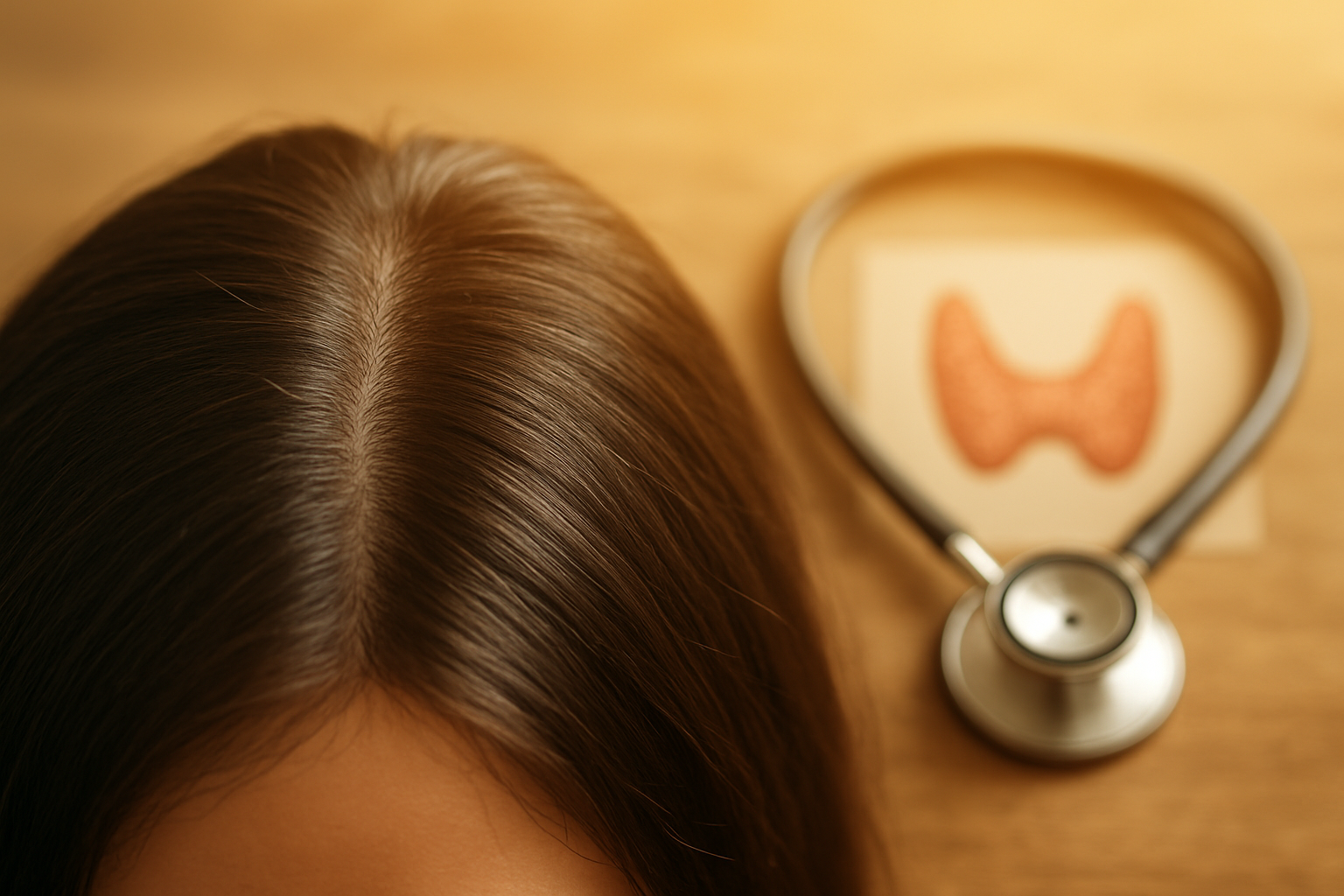
Thyroid disorders can seriously mess with your hair, causing everything from thinning strands to patchy bald spots. The good news is that once you recognize the warning signs and get properly tested, you can tackle the root cause head-on.
Treating your thyroid condition is the first step to getting your hair back on track, and the right medications can make a huge difference in stopping further loss.
Don’t just stop at medical treatment though. Supporting your hair recovery with the right nutrients, managing stress, and making smart lifestyle choices can speed up the whole process.
Your hair didn’t disappear overnight, so be patient with the regrowth journey. If you’re dealing with unexplained hair loss, talk to your doctor about thyroid testing – catching and treating thyroid issues early can save you months of frustration and help you get back to having the healthy hair you deserve.
For More Information Contact Us : 73386 71338