
Hair transplants have become one of the most trusted solutions for male hair restoration, hair loss surgery, and long-term hair regrowth. But the question most patients ask before undergoing a procedure is:
👉 Is a hair transplant permanent?
👉 Do hair transplants last forever?
👉 Can transplanted hair fall out again?
In this complete guide, we break down the science, results, longevity, and facts surrounding permanent hair restoration, including FUE transplants, FUT, SMP, PRP, scalp injections, and advanced regrowth treatments.
Whether you’re struggling with male pattern baldness, thinning hair, crown loss, or receding hairline, this article will help you understand exactly how long your results last.
What Exactly Is a Hair Transplant?
A hair transplant is a surgical hair loss treatment where healthy hair follicles are extracted from a permanent donor area—usually the back or sides of the scalp—and implanted into bald or thinning areas.
Two primary methods are used:
FUE Transplants (Follicular Unit Extraction)
A popular minimally invasive method where individual hair follicles are extracted and implanted.
✔ No linear scar
✔ Fast healing
✔ Looks natural
✔ Works for hairline, crown, beard, & eyebrows
FUT (Follicular Unit Transplantation)
A traditional strip method ideal for patients needing larger graft counts.
✔ Higher graft yield
✔ Economical
✔ Effective for advanced baldness
Both techniques involve permanent follicles, which is why hair transplant results are long-lasting.
So, Is a Hair Transplant Permanent?
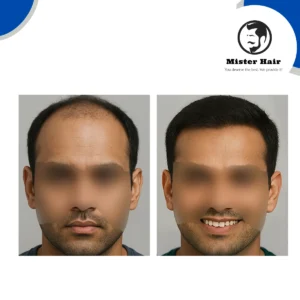

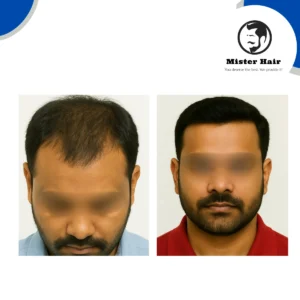
✔ YES — Hair transplants are considered permanent.
The transplanted follicles come from the DHT-resistant zone at the back of the scalp. These hairs do not fall out due to male pattern baldness, even when relocated.
Why transplanted hair lasts forever:
-
It retains the genetics of the donor hair
-
Resistant to hormonal hair loss
-
Continues to grow naturally
-
Can be cut, washed, styled like normal hair
This is why hair restoration is often referred to as permanent hair replacement.
But Does “Permanent” Mean You’ll Never Lose Hair Again?
✔ Transplanted hair: Permanent
Not exactly.
Here’s the truth:
✔ Existing native hair: Not permanent
If your natural hair continues to thin due to androgenetic alopecia, you may require:
-
PRP
-
Scalp injections for hair growth
-
Medical hair loss treatments
-
Finasteride / Minoxidil
-
Low-level laser hair restoration
A second session is sometimes needed to maintain density.
For More information Contact Us : 73386 71338
What Determines How Long a Hair Transplant Lasts?
Several factors influence the results:
1. Surgeon Expertise
A skilled surgeon ensures:
✔ Healthy graft extraction
✔ Correct angle & direction
✔ High survival rate
Poorly executed surgeries may lead to low-density or unnatural-looking results.
2. Donor Hair Quality
Stronger donor areas → longer-lasting results.
3. Technique Used
FUE transplants and FUT both offer permanent results, but advanced techniques like Sapphire FUE or DHI improve density and natural appearance.
4. Aftercare Compliance
Good aftercare prevents graft damage.
5. Patient’s Natural Hair Loss Progression
Hair transplants do not stop ongoing hair loss in untreated areas.
Will I Need a Second Transplant in the Future?
You may need an additional session if:
-
You have advanced baldness
-
Natural hair continues to recede
-
You want more density
-
You undergo the first transplant at a young age
A maintenance plan with PRP, GFC, exosome therapy, medications, and laser hair restoration can delay further transplants.
How Long Do Hair Transplant Results Take?

✔ 1–3 Months
Shock loss & early growth
✔ 4–6 Months
Visible improvement & density
✔ 9–12 Months
Majority of results appear
✔ 12–18 Months
Full density & natural appearance
Hair transplant for male pattern baldness delivers the best results when combined with long-term hair care treatments.
Is Hair Transplant the Best Permanent Hair Restoration Option?
Compared to other treatments:
| Treatment | Permanent? | Effectiveness |
|---|---|---|
| FUE Hair Transplant | ✔ Yes | ⭐⭐⭐⭐⭐ |
| FUT | ✔ Yes | ⭐⭐⭐⭐ |
| Scalp Micro Pigmentation (SMP) | ✖ No | Cosmetic only |
| PRP / GFC | ✖ No | Supports growth |
| Exosome therapy | ✖ No | Advanced stimulation |
| Hair injections | ✖ No | Thickening |
| Laser hair restoration | ✖ No | Slows hair loss |
Transplants remain the ONLY truly permanent solution.
Do Hair Transplants Look Natural?
YES — modern techniques ensure results look extremely natural.
Key elements include:
-
Correct angle
-
Proper density
-
Natural temple points
-
Follicular unit spacing
-
Hairline artistry
A skilled surgeon can replicate your original hair pattern seamlessly.
Can Transplanted Hair Fall Out Later?
Transplanted hair may shed temporarily in the first 2–8 weeks (shock loss), but this is normal.
Permanent loss of transplanted hair is rare unless:
-
You undergo poor surgery
-
You have a severe scalp infection
-
Grafts are damaged by trauma
Otherwise, transplanted hair lasts a lifetime.
How to Maintain Your Transplanted Hair
To preserve results:
-
Avoid smoking/alcohol
-
Use prescribed hair care products
-
Follow a hair transplant guide
-
Consider PRP or GFC treatments yearly
-
Protect scalp from sun
-
Maintain good nutrition
For More information Contact Us : 73386 71338
Do Hair Transplants Work for Everyone?
Hair transplants work best for:
-
Male pattern baldness
-
Receding hairlines
-
Crown thinning
-
Beard restoration
-
Permanent hair loss
Not ideal for:
-
Alopecia areata
-
Insufficient donor supply
-
Patients with active scalp infections
Modern Improvements in Permanent Hair Restoration
Today’s hair transplants are more advanced because of:
Sapphire blades
Finer incisions → high density
DHI implantation
Direct placement → natural growth pattern
Exosome hair therapy
Regenerates damaged follicles
PRP & GFC
Enhances growth rate
Laser hair restoration
Supports long-term survival
FAQs: Is Hair Transplant Permanent?
1. Are hair transplants permanent?
Yes, transplanted hair from the donor zone grows permanently.
2. Do hair transplants last forever?
Transplanted hair does.
However, existing non-transplanted hair may still fall out.
3. Can transplanted hair fall again after years?
Only due to trauma, illness, or poor surgical technique—rare.
4. Which hair transplant method is most permanent?
FUE, FUT, and Sapphire FUE give lifelong results when done correctly.
5. Is hair transplant better than PRP or hair injections?
Yes — PRP, scalp injections, and laser hair restoration support growth but are not permanent solutions.
6. What age is best for a permanent hair transplant?
Ages 25–50 are ideal.
7. Is hair transplant a cure for male pattern baldness?
It restores lost hair permanently but does not stop future thinning — maintenance is needed.
Final Verdict: Yes — Hair Transplants Are Permanent When Done Correctly
A hair transplant is the only proven permanent hair restoration procedure available today.
With advanced methods like FUE, Sapphire FUE, DHI, and modern support treatments such as PRP, Exosome therapy, and laser hair restoration, results can last a lifetime.
If done by an expert surgeon and followed by proper aftercare, you can enjoy natural, lifelong, and dense hair growth.
For More information Contact Us : 73386 71338