The Benefits of DHI in Hair Restoration
Hair loss can be an incredibly frustrating and emotional experience, impacting both your self-esteem and your daily life. Fortunately, the world of medical aesthetics has evolved dramatically over the last decade. Gone are the days when restoring a full head of hair meant enduring highly invasive surgeries with long, painful downtimes. Today, DHI in hair restoration stands out as one of the most advanced, precise, and highly sought-after treatments available globally.
If you are exploring your options for a permanent solution to thinning hair or a receding hairline, understanding the nuances of this modern technique is essential. Let’s dive deep into the mechanics, benefits, and recovery processes associated with this innovative procedure.

What is DHI? Understanding the Basics
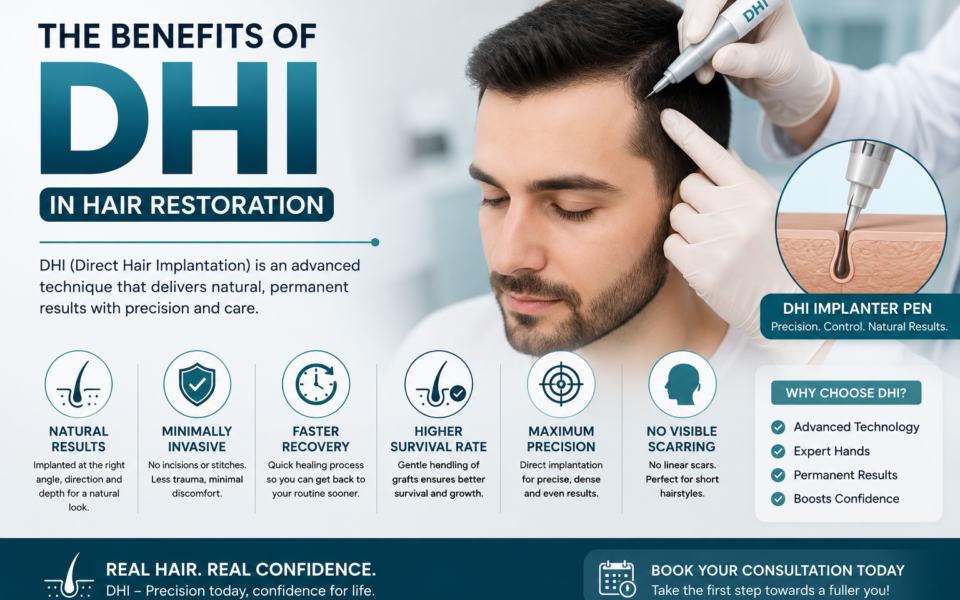
DHI stands for Direct Hair Implantation. It is a highly refined modification of traditional follicle extraction techniques that prioritizes precision and natural-looking results.
The secret to this procedure lies entirely in the Choi implanter pen technique. Rather than making manual incisions in the scalp before implanting the hair follicles, a specialized surgeon uses this pen-like device to extract the follicle and implant it directly into the recipient area in a single, fluid motion. Because the pen allows for simultaneous channel creation and implantation, the follicles spend significantly less time outside the body, preserving their health and vitality.
DHI vs FUE Hair Transplant: What’s the Difference?
When researching hair restoration, you will inevitably encounter the debate of DHI vs FUE hair transplant methods. Both are excellent choices, but they cater to slightly different needs.
In traditional Follicular Unit Extraction (FUE), a surgeon extracts the follicles, stores them in a nutrient solution, and then uses a micro-scalpel to open hundreds of tiny channels in the scalp before manually placing the grafts. DHI eliminates the need for this separate channel-opening phase.
This leads many patients to ask: is DHI better than traditional FUE? The answer depends on your specific hair goals. While traditional FUE is often preferred for treating massive areas of baldness in a single session, DHI is widely considered superior for localized density, precision, and minimizing trauma to the scalp. Furthermore, because DHI targets specific areas with pinpoint accuracy, it is perfectly suited for no-shave follicular unit extraction. This means you don’t necessarily have to shave your entire head to undergo the procedure, allowing you to return to your normal life with maximum discretion.

The Top Benefits of a DHI Hair Transplant
Choosing to undergo a dhi hair transplant offers a wealth of unique advantages that set it apart from older surgical methods. Here are the core benefits you can expect:
- Exceptional Graft Viability: Because the hair follicles are implanted almost immediately after extraction, the graft survival rate in DHI is exceptionally high, often exceeding 90-95%.
- Artistic Precision: Crafting a realistic hairline requires immense skill. Achieving a natural hairline design with Choi pen is much easier for the surgeon, as the device allows for complete control over the depth, direction, and angle of every single hair follicle.
- High Density: If you are looking to pack hair closely together for a thicker look, DHI is ideal. The fine needle of the implanter pen allows surgeons to achieve the maximum graft density per cm2 without damaging neighboring healthy hairs.
- Virtually Invisible Scarring: By eliminating the need for scalpels and pre-made incisions, minimizing scarring with direct hair implantation becomes a reality. The puncture marks are so tiny they heal almost invisibly.
- Discreet Procedures: For professionals or those who want to keep their surgery private, non-shaven hair transplant options are a massive draw. Your surgeon can often work around your existing hair, meaning you won’t have to sport a buzz cut.
The Procedure and Recovery Timeline
Patient comfort is a top priority during any modern cosmetic procedure. Before the extraction even begins, doctors administer local anesthesia for hair restoration, ensuring the scalp is completely numb and the patient remains pain-free, awake, and comfortable throughout the session.
Once the surgery is complete, patients are usually pleasantly surprised by the DHI hair transplant recovery timeline. Because the procedure is incredibly minimally invasive, the micro-wounds scab over and heal very quickly. Specifically, donor area healing after DHI is remarkably fast; most redness and scabbing in the back of the head subside within 3 to 5 days.
Actionable Tips for Post-Operative Care
To ensure the newly transplanted dhi hair takes root securely, following your surgeon’s guidelines is non-negotiable. Proper post-operative care for DHI patients includes:
- Hydrate the scalp: Use the prescribed saline sprays to keep the recipient area moist during the first few days.
- Sleep elevated: Prop your head up with pillows at a 45-degree angle for the first 3-5 nights to prevent facial swelling.
- Avoid physical exertion: Skip the gym, heavy lifting, and intense cardio for at least two weeks to prevent sweating and blood pressure spikes.
- Wash gently: Follow your clinic’s specific instructions for the first hair wash (usually 48 hours post-op), using only mild, chemical-free shampoos.

Candidacy and Financial Considerations
So, who is a candidate for DHI? Generally, ideal candidates are individuals suffering from androgenic alopecia (male or female pattern baldness), receding hairlines, or thinning crowns. It is also highly recommended for individuals looking to lower their hairline, fix patchy beards, or increase density among existing hair without shaving their head.
When considering this investment, it’s helpful to understand DHI hair transplant cost factors. Because DHI requires highly specialized tools (single-use Choi pens) and immense manual dexterity, it typically costs slightly more than a standard FUE procedure. The final price will be influenced by the experience level of the surgeon, the geographic location of the clinic, and the total number of grafts required to achieve your desired aesthetic goals.
Final Thoughts on DHI Hair Restoration
Ultimately, opting for DHI in hair restoration is an investment in unparalleled precision, rapid recovery, and a truly flawless aesthetic. By combining higher graft survival rates with the artistic control of the Choi pen, this technique offers a permanent, natural-looking solution to hair loss. Whether you want to densely pack a thinning crown or redefine your hairline with absolute discretion, DHI provides the medical technology necessary to help you reclaim your confidence and your hair.
← Back to all articles