
Hair Transplant Shedding: Why It Happens and When Hair Grows Back
Getting a hair transplant is often followed by a period when the scalp looks different from what you expected. One of the most confusing stages is hair transplant shedding. Some of the newly transplanted hairs may fall out after the procedure, making patients wonder whether the grafts have failed.
In many cases, shedding is part of the normal hair-growth cycle after transplantation. The visible hair shaft can fall while the follicle remains in the scalp and continues through its natural growth cycle.
Understanding this stage can make the recovery process much less stressful.
The Early Changes After a Hair Transplant
A hair transplant involves moving healthy hair follicles from a donor area, usually the back or sides of the scalp, to areas affected by hair loss.
The follicles need time to adjust after being transferred. During the early recovery period, patients may notice redness, mild swelling, crusting and changes in the appearance of the transplanted area.
After the initial healing stage, another change can occur: some transplanted hair shafts may shed.
This does not automatically mean that the transplanted follicles have been lost.
The follicle is the important structure beneath the skin. The visible hair shaft is only one part of the growth cycle.
Why Hair Shedding Can Happen After Transplantation
Hair follicles naturally move through different phases of growth and rest. A transplant temporarily changes the environment around the follicles.
As the follicle adjusts, the existing hair shaft may enter a resting or shedding phase.
This is sometimes referred to as shock loss or postoperative shedding.
The important distinction is between the visible hair and the follicle itself. Seeing hairs fall during recovery can therefore be alarming, but the appearance of shedding alone does not establish that the transplant has failed.
Every patient’s recovery can be different depending on factors such as the number of grafts transplanted, the characteristics of the existing hair, the condition of the scalp and the individual’s natural growth cycle.
Transplanted Hair and the Existing Hair Are Not the Same
After a transplant, there are usually two groups of hair to consider.
The first is the newly transplanted hair.
The second is the patient’s original hair surrounding the transplanted area.
Existing hair can also become temporarily weaker or shed after a procedure. This is one reason why hair restoration should be planned around the overall condition of the scalp rather than focusing only on the number of grafts.
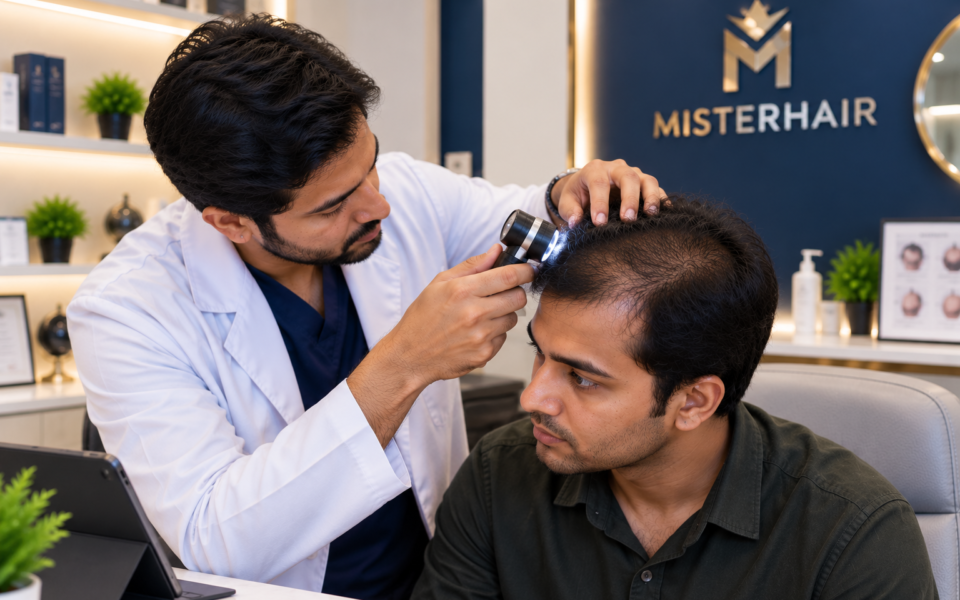
At MisterHair, treatment planning begins with assessing the individual’s hair loss pattern, donor area and existing hair before deciding how transplantation should be approached.
The 8-Point Hair & Scalp Analysis can help evaluate factors such as hair-loss grade, donor density, scalp condition, hair shaft characteristics and possible medical or nutritional contributors.
What the Hair Transplant Shedding Phase Can Look Like
The shedding phase does not look identical for everyone.
Some patients may notice a gradual reduction in the visible transplanted hair. Others may notice more obvious shedding over a shorter period.
The transplanted area can temporarily appear thinner than expected.
This can be frustrating because patients naturally expect the transplanted hair to continue growing immediately after the procedure. Hair restoration, however, is a biological process rather than an instant cosmetic change.
The appearance during the early months should therefore not be used as the final measure of the transplant result.
When Does New Hair Growth Begin?
After the shedding stage, transplanted follicles generally need time before producing visible new growth.
Hair growth occurs gradually, so the early regrowth phase may look uneven or sparse.
Over subsequent months, new hairs can become increasingly visible and mature.
The exact timeline varies between individuals. Factors such as the patient’s natural hair-growth cycle, follicle characteristics, scalp condition and overall health can influence the process.
This is why hair-transplant results are assessed over a longer period rather than judged from photographs taken only a few weeks after surgery.
For more information about the procedure itself, see the MisterHair Hair Transplant service.
Why Patience Matters During Hair Transplant Recovery
One of the biggest mistakes patients can make is constantly comparing their scalp with photographs of someone else’s recovery.
Two people can undergo similar procedures and experience different visible changes during the same period.
Hair thickness, growth speed, graft characteristics and the original pattern of hair loss all vary.
Instead of comparing day-to-day changes, it is more useful to follow the recovery instructions provided by the treating team and attend recommended follow-up appointments.
Photographs taken under similar lighting and from consistent angles can also provide a more meaningful way to observe gradual changes.
Hair Transplant Shedding Does Not Mean the Treatment Has Failed
Seeing transplanted hairs fall out can understandably create anxiety.
However, the presence of shedding by itself is not enough to determine whether the follicles are viable or whether a transplant has succeeded.
A proper clinical assessment is more useful when there are concerns about unusual healing, persistent inflammation, significant changes in the donor area or other unexpected symptoms.
Patients should avoid attempting to diagnose the condition simply by counting shed hairs.
Supporting Hair Growth After a Transplant
Post-transplant care is an important part of the overall treatment process.
Patients should follow the clinic’s instructions regarding:
- Scalp washing
- Physical activity
- Sun exposure
- Sleeping position
- Products applied to the scalp
- Follow-up appointments
- Any prescribed medication or treatment
Depending on the individual’s condition, non-surgical treatments may also be considered as part of a broader hair-loss management plan.
For example, PRP hair treatment may be discussed for appropriate patients as part of a personalised treatment strategy.
The objective is not simply to focus on transplanted follicles but to consider the condition of the patient’s existing hair as well.
When Should You Speak to a Hair Restoration Specialist?
Some level of shedding can occur during recovery, but patients should contact their treating clinic if they are concerned about symptoms that appear unusual or are worsening rather than improving.
A professional assessment can help distinguish expected recovery changes from issues that may require attention.
A consultation is also useful for patients who are considering a transplant but are unsure whether they need surgery at all.
MisterHair’s 8-Point Hair & Scalp Analysis is designed to assess the hair and scalp before recommending a treatment approach. Depending on the findings, the recommendation may involve surgical treatment, non-surgical treatment or no treatment.
Understanding the Long-Term Hair Transplant Journey
A hair transplant should be viewed as a process rather than a single-day procedure.
The surgery moves selected follicles, but those follicles still follow a biological hair-growth cycle afterward.
The early stage may involve healing and shedding. Later stages involve gradual regrowth and maturation.
The final appearance depends on several factors, including the quality of the donor follicles, the original hair-loss pattern, graft planning, existing hair and individual growth characteristics.
That is why realistic planning is just as important as the surgical technique itself.
Frequently Asked Questions
Is hair transplant shedding normal?
Shedding of transplanted hair can occur during the recovery process. The visible hair shaft may fall while the follicle remains in the scalp.
When does hair start growing after transplant shedding?
New visible growth generally takes time after the shedding phase. The timeline varies between individuals, so early appearance should not be treated as the final result.
Does transplanted hair fall out permanently?
Not necessarily. Hair shedding after transplantation does not automatically mean that the transplanted follicle has been permanently lost.
Can existing hair also shed after a hair transplant?
Yes. Existing hair around the transplanted area can also experience temporary shedding in some patients.
Should I worry if my transplanted hair falls out?
Shedding alone does not necessarily indicate a problem. If you have concerns about healing or unexpected changes, a professional assessment is appropriate.
Can PRP be used after a hair transplant?
PRP may be considered for suitable patients as part of a personalised hair-loss management plan. The appropriate timing and suitability should be determined by the treating professional.
Planning a Hair Transplant?
A proper assessment can help determine whether transplantation is appropriate and which treatment approach fits your hair-loss pattern.
MisterHair
Hair Restoration | DHI | Sapphire FUE | Hair Treatments
Call: 7338671338
Email: reachus@misterhair.in